|
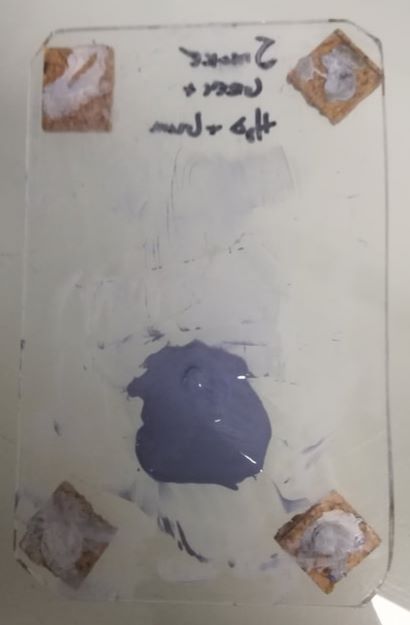
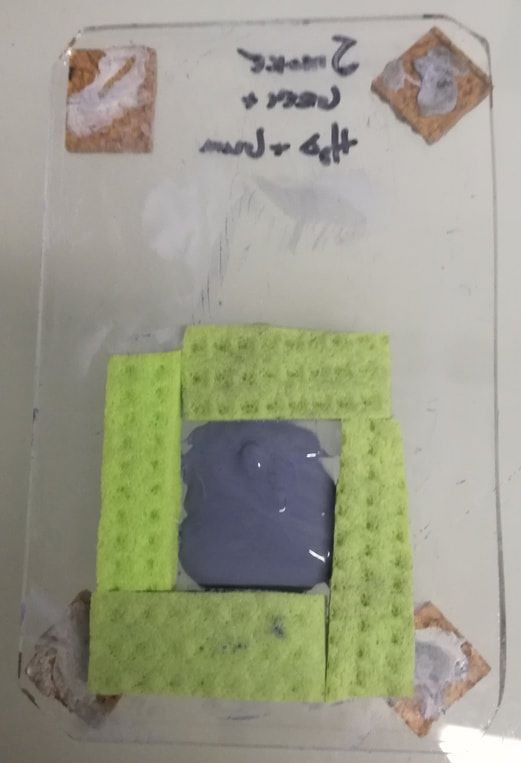
I've been asked to address how I store my paint pallets. I cut most of my palettes from 6mm float glass, and safety the edges. My palettes are all cut to fit inside lock and seal plastic Tupperware-style containers. I attach feet to the corners and write onto the back of each one what it contains (the name of the paint(s), the liquid it's been mixed with, and whether it has gum Arabic or not). Writing it on the back ensures the writing doesn't get removed as you mix the paint.
Once I'm done painting, I'll gather the paint together into a neat lump on the palette, then surround it with four strips of wet cellulose sponge. I group my palettes together by colour and by temperature of the paint. I stack them on the lid of the Tupperware container, lower the 'bottom' of the Tupperware over the top, and seal it shut. I write the name of the grouping on the outside, and add it to my ever-growing stack of palettes.
Labelling each palette ensures I know exactly what it is, even after months and years have elapsed. Surrounding the lump of paint with wet sponges , stacking the palettes and storing them in lock and seal type containers ensures the paint stays damp -- and clean. I've returned palettes after months have elapsed, and the paint was still damp and required very little mixing to resume working with it.
1 Comment
Stained glass is so often used to reinforce dominant narratives. In the European tradition, it almost invariably depicts widely-accepted narratives and theologies, and/or serves to flatters patrons, whether ecclesiastical, governmental or private. But there are apparent exceptions. Here are a few examples: 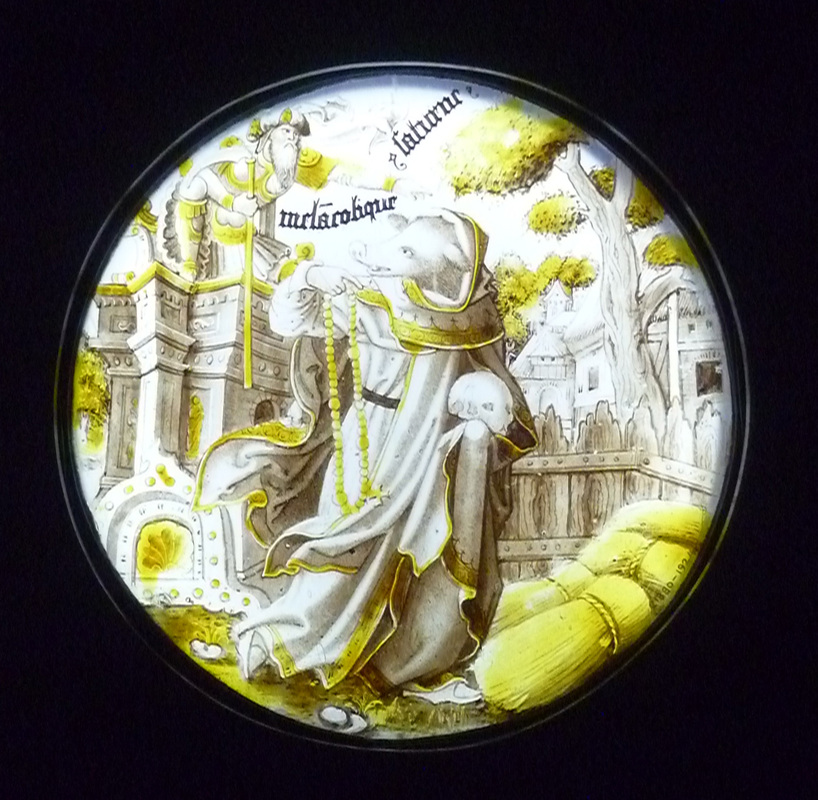 Time Banishing Melancholy (c. 1530, Netherlands). While the imagery in this roundel isn't fully understood, it shows a monk with a pig's head being driven away. Since it is likely from the Netherlands in the 16th c., it can be interpreted as anti-clerical. From the collection of the Victoria & Albert Museum. 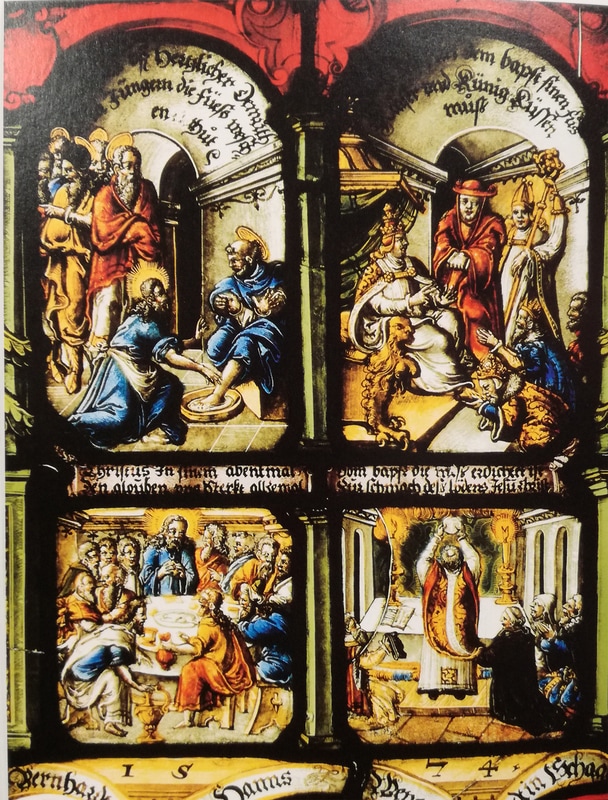 In this Swiss panel from 1574, the acts of Jesus are contrasted with acts of the Pope. Jesus is shown washing the feet of his disciples, whereas the Pope is shown with a king kneeling at his feet. Jesus is shown breaking bread to share with his disciples at the Last Supper, where the Pope is shown with his back to the viewer, offering the communion host to an altar with giant golden candlesticks.
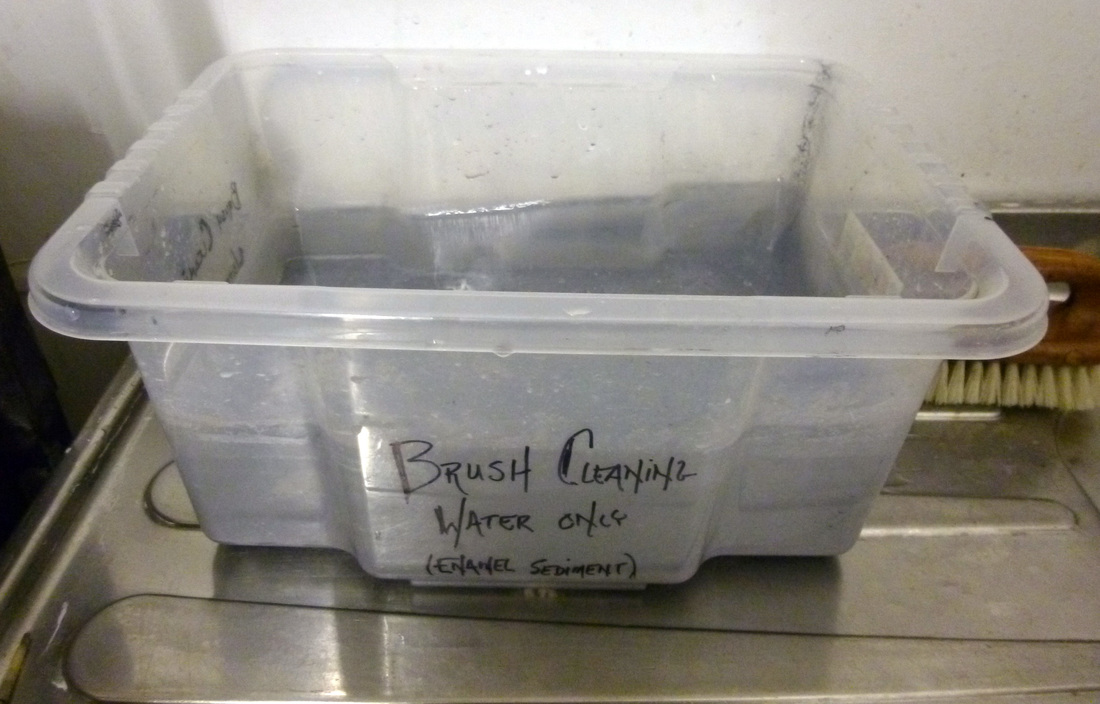
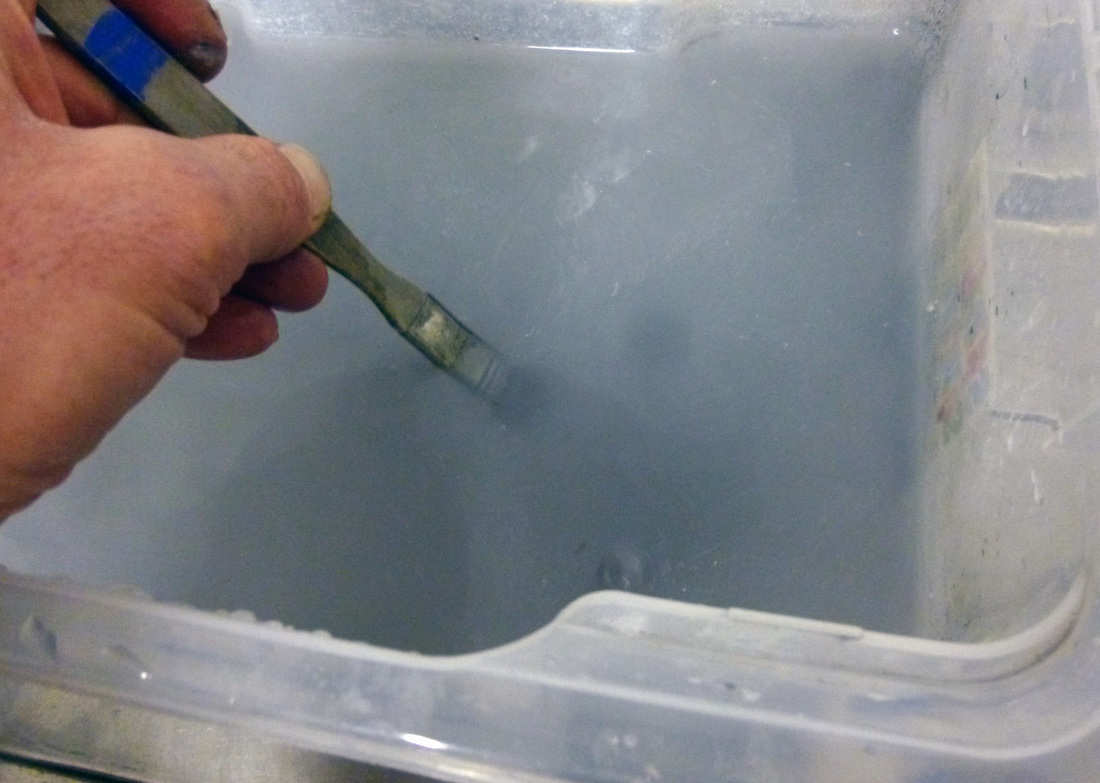
(Image shamefully photographed from a page of Virginia Chieffo Raguin's wonderful 'History of Stained Glass: The Art Of Light, Medieval To Contemporary'. Proper image and credit to follow.)  I remember hearing when I was young if an artist wants to make something that lasts they must use toxic materials. It's the nature of organic materials to decay and disintegrate; if you want something to last, it's got to be resist this natural progression. It's no coincidence that I work with glass paints and enamels from the stained glass tradition. That stuff can last for hundreds, if not thousands, of years. If a material can't last that long, I don't want to be bothered with it. Long after Damien's shark has resisted the final taxidermist's attempts to save it and Tracey's bed has driven conservators to despair, my pieces should be able to sit comfortably glowing in the corner -- needing only a change of lights every so often. However, I care about the environment, and it pains me that some of the materials I need to use to achieve this permanence are, let's face it, toxic. Lead, cadmium, chromium. (Though they are safe in my pieces once the glass has been fired.) So, I want to minimise the amount of these materials I release into the environment. (I'm also cheap and hate waste.) In my studio the primary source of enamel waste is the result of washing brushes. Here's how I minimise the amount of enamel I waste and wash down the drain. The core of these ideas came to me from the lovely man and teacher Mark Angus, and have been built upon and adapted to my way of working. I work almost exclusively with water, vinegar, propylene glycol, gum arabic and other water-soluble media. If you work with oils, you'll need to devise your own methods. The set-up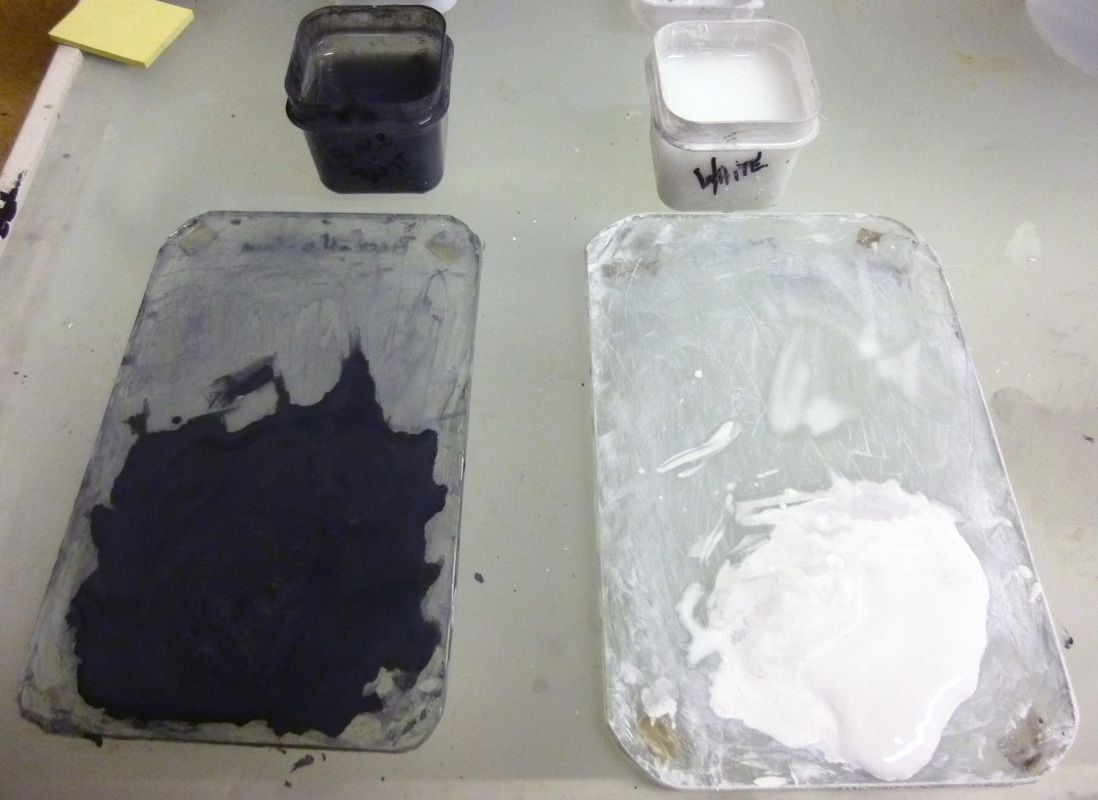 Palettes & water for each colour Palettes & water for each colour First, I use a separate tub of water for each enamel colour I use. Here you see my black and white palettes, and their corresponding black and white tubs of water. These tubs have covers, so they can be kept clean in between uses. I use these to clean and refresh my brushes while painting. Of course, in order for this work, I’ve got to use separate brushes for each colour. Dipping the brush with black enamel into the white tub will pollute the white enamel.
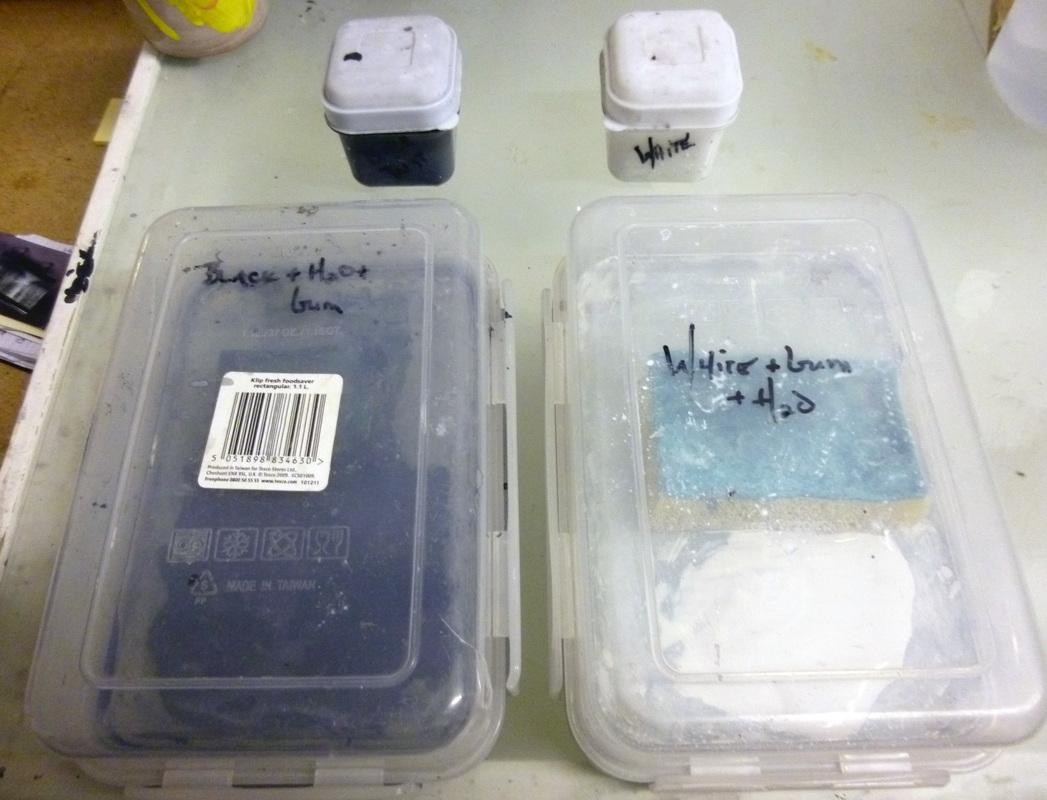 Covered tubs and palettes Covered tubs and palettes Cover the tubs of water and your glass palettes. This keeps them clean and helps prevent evaporation.
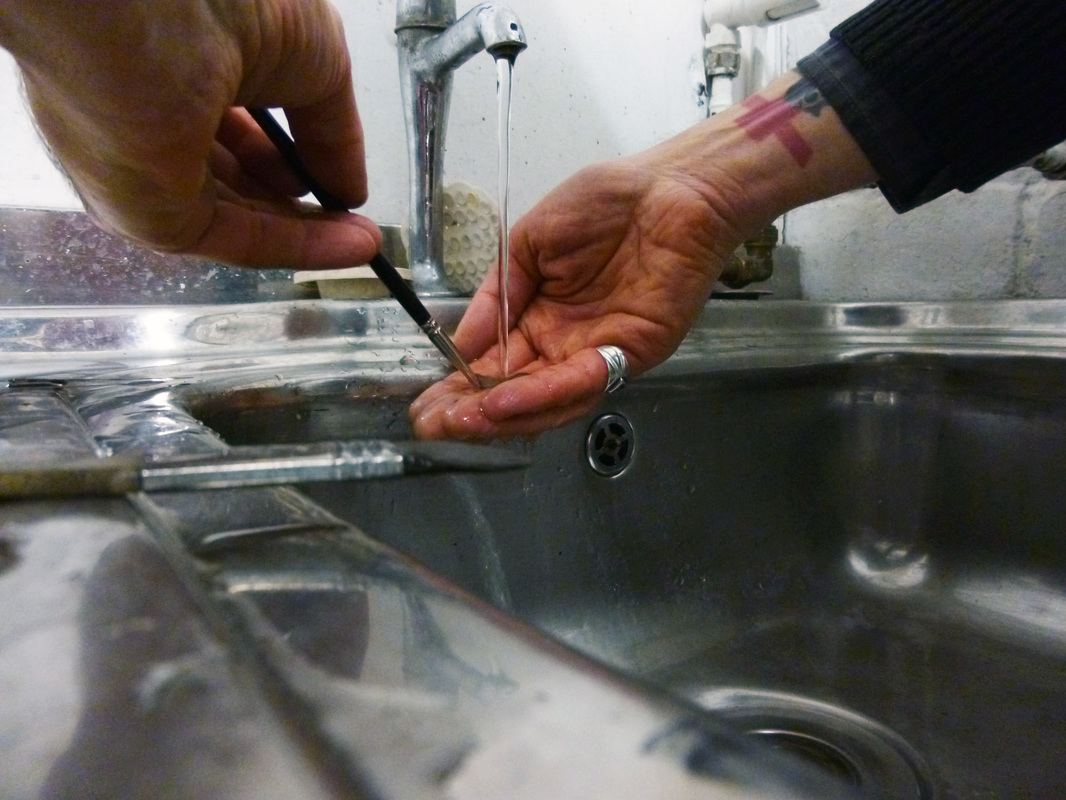 Finally, I wash each brush under cold running water until the water runs clean. By the time I’ve reached this step, there is very little enamel left in the brushes - therefore very little being put into the water stream. What to do with all that sediment?So, you've saved the enamel from going down the drain. Now what? Usually in my work flow, I have periods of intensive painting, and periods where I’m not doing much, if any, painting at all. After a week or more of not being disturbed, the enamel in my tubs has settled to the bottom, leaving largely clear water. For the smaller, color specific tubs, I gently pour the clear water into the large settlement tub by my sink. I can then scrape this untainted paint back onto the appropriate palette and use it as normal. 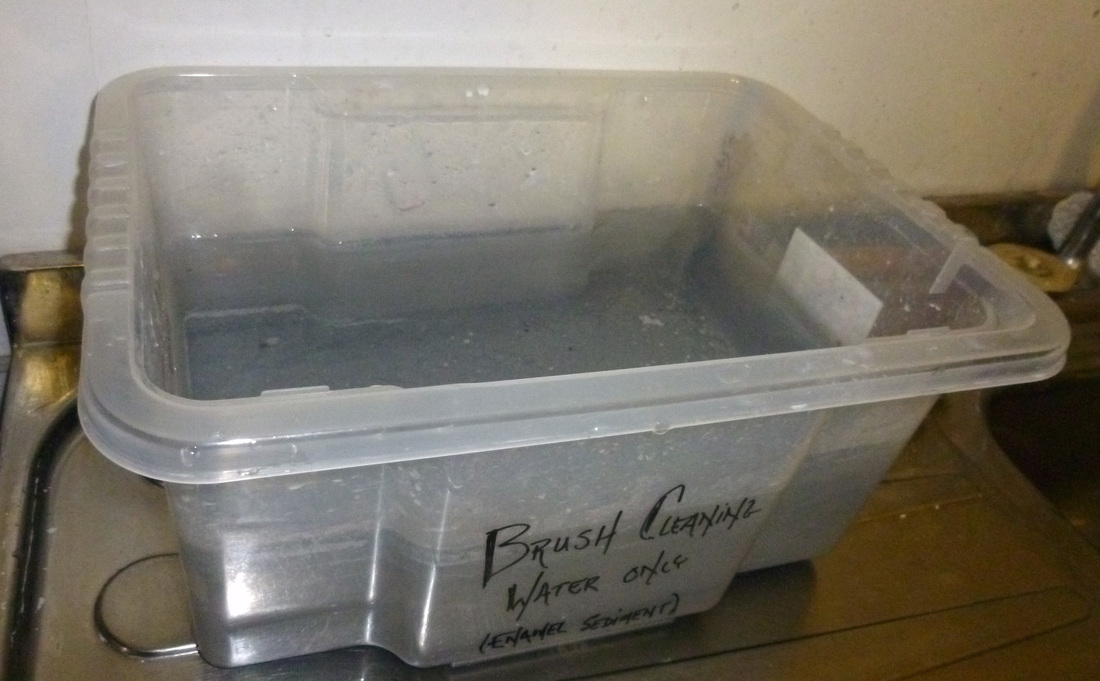 Settled Settled I don't like to leave this clear water sitting around too long. Once all the toxic stuff starts to settle out, things start to grow in it. So, I gently pour the clear water out of the large tub, leaving the mixed colour enamel sediment at the bottom. I usually let this set out for a day to dry out somewhat, then I scrape the sediment out of the bottom and into a tub marked ‘Settlement.' I don't worry if I'm not able to scrape every last bit out; it can always stay in the bottom of the tubs for the next lot. I refill the large tub with water and set it back beside the sink. The sediment from the ‘Settlement’ tub is going to be a mongrel mix of every enamel I’ve used. It will also likely have dust and stray brush hairs in it. I can either set it aside to use in a project later – if I want some slightly dirty, grey-ish enamels. If I’m teaching outside my studio, I can either offer this sediment to the students to take home with them and use (if they're feeling brave), or it can be painted onto waste glass from the class and fired with the last firing. In this case, the enamel is still ‘wasted’, but it is affixed to the glass and can be thrown away without worrying about it polluting the water.
What methods do you have for reducing the waste from your glass enamels? 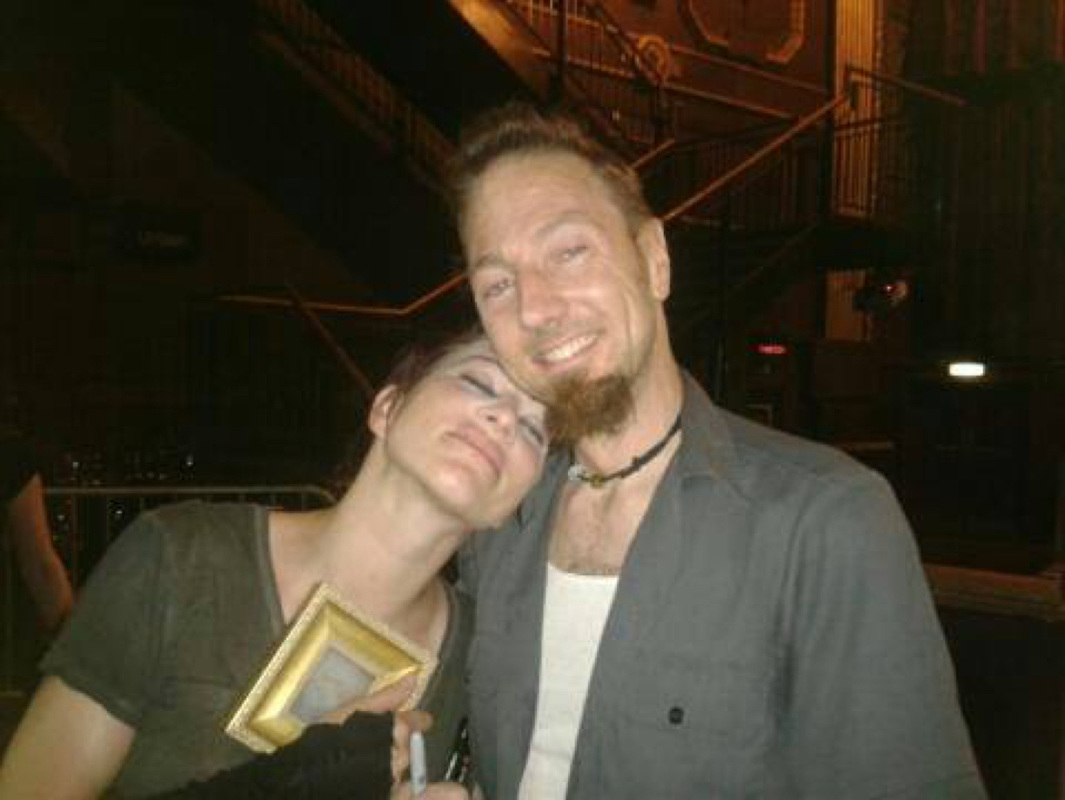 Amanda Palmer is coming to Edinburgh! Which reminds me of the story of how I came to create the smallest – and quickest – piece of my career to give to her.
I’ve been a massive fan of Amanda Palmer (and the Dresden Dolls) since 2004. Her music has articulated feelings and conflicts I could only glimpse through murky mists. I don’t often go to gigs, but have seen Amanda live at least five times – from a sticky-floored dank room she stuck to when her band mate backed out of a tour, a decadently-mirrored Spiegeltent, as one half of conjoined twins in a university lecture theatre, crowdsurfing over my head in a mosh pit, and to larger gigs in old movie palaces. Each event has had a different character: all have been magnificent. Since I was a teenager I’ve been rather obsessed with mortality, its images and motifs. I probably would have been a budding goth if I didn’t feel the irresistible pull of a beautiful melody and looked dreadful in black. I’ve been thinking about contemporary images to create memento mori (remember you will have to die) images for our on-line world. As I was considering this, Amanda Palmer’s song ‘Smile (Pictures or It Didn’t Happen)” kept eating away at me. I love the song and listened to it incessantly, but its repetition of the on-line goad ‘pictures or it didn’t happen’ began to disturb me. (I know that the lyric isn't itself a celebration of the 'pictures or it didn't happen' mentality, but her use of it in this song pushed my imagination along its own path.) When I was 25 years old, I lost my beautiful lover John. John was nine years older than me, and helped me come out of the closet. He affirmed that there was nothing wrong with who I was. He educated me about queer identities and politics. He was my first love and the world we shared was both expansive and intimate. From the day we met (I laid eyes on him and knew I was going to ‘marry’ him - as far as our 'we don't need a socially-designated model to affirm the validity of our relationship' would allow) until the day he died, our lives and souls were intimately intertwined. Then, after a year long struggle with AIDS, John died a horrible, messy, painful death. And the world we'd created was gone. No one else knew the in-jokes or had our shared experience. No one else knew the story of that street corner, this fountain, that rock, or the things about the things on our flat - the tchochkes, the books and music. This was in 1995 – the pre-internet age. Today, I’m as caught up in the on-line world as most people, but my relationship with John blossomed, thrived and was cut short with nary a Facebook status to announce it or post to show for it. And, if I Google him, he simply doesn’t show up. Which makes the goading of ‘pictures or it didn’t happen’ mournful to me. When Amanda Palmer was coming to Edinburgh a couple of years ago, I got a ticket. Then, it turned out that my current partner’s friend’s colleage is a very good friend of Amanda's. The possibility was discussed that she might be able to get me backstage after the concert to meet Amanda. Nothing was certain and I didn’t expect anything, especially from a complete stranger. However, four hours before the gig was to start I got the news – it was on! I was going backstage! I’ve never been backstage at a concert. I didn’t know what the etiquitte was. I mean, you never show up at someone’s house without a gift – surely coming backstage to meet a performer is the same? And I know that Amanda appreciates the creative expression of others. So, I thought: I’ll make a memento mori piece for Amanda that will capture this strong response I was having to ‘Smile.’ I had four hours. It usually takes me 4-5 *weeks* to make something. It’s got to be painted and fired and painted again, ad apparently infinitum. I thought I could just about paint something small, whack it in the kiln, fire it to 580°C, allow it to cool, get it out, frame it, and get to the gig. So, I did. I painted a skull on two layers of glass, and engraved the phrase ‘pictures or it didn’t happen’ on it, and put it in a miniature gold frame. I put on a ridiculous outfit and headed to the Picture House. I met my partner’s friend’s colleague and her husband – who were lovely beyond belief, and had an amazing time at the concert (as always). Afterwards, I stayed to finally get to meet one of my idols. Amanda and the band had to get on the bus to catch the ferry to Belfast, and they were being hurried out of the venue. She was exhausted, but stayed and signed cds and tshirts and talked with everyone.. At last, she approached our wee group. She was exhausted. She had to go catch the bus. I could see she was spent. I thought I’d just say hello and say something generic and gushy about how wonderful she was and let her go with a minimum of fuss. But my partner’s friend’s colleague knew I'd made something for Amanda and wouldn’t let my shyness prevent me from imposing. Amanda was lovely. She was exhausted and they were calling for her to get her shit together and get on the bus. And here was some oddly-dressed guy who was wanting to give her something. I could see her summon all her strength and all of her patience and look me in the eye as I tried to tell her why I was giving her a rather crudely painted skull on layers of glass with a lyric from her song etched on it. I don’t know what I said, but it was some jumble of losing my lover and the internet and love and loss and memory. And she pressed my gift to her heart and did what Amanda Palmer does – gave me a huge hug. My partner’s friend’s colleague took a photo of the two of us, and Amanda was gone. What she made of the gift I have no idea. Perhaps it’s become an inside joke for her and her loved ones about the weird things fans give you when you’re on the road. Perhaps it's come to mean something else to whoever has it. Perhaps it’s been thrown away or lost. Maybe she remembers it, or maybe not. Perhaps she’ll read this, or perhaps not.. No matter. It did what it needed to do in the moment - it facilitated a human interaction. What it does after that is its own journey. As Amanda knows 'The Thing About Things' is they take on their own meanings. https://amandapalmer.bandcamp.com/releases 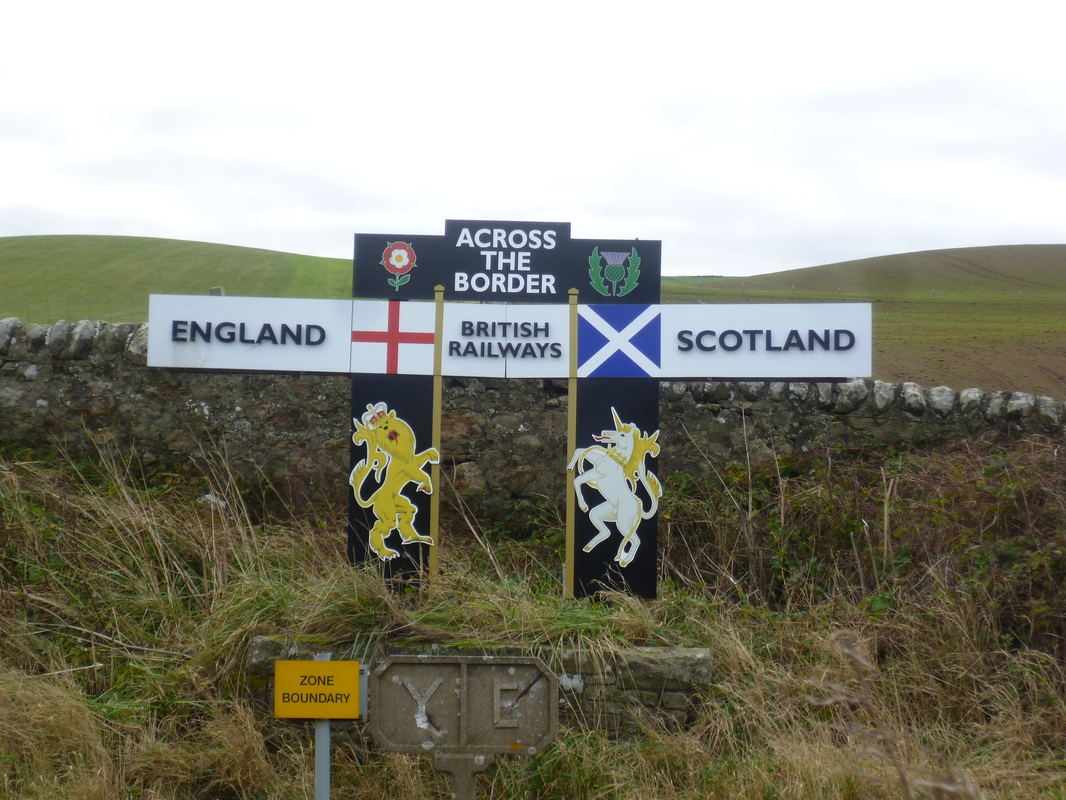
The Scottish-English Border on the East Coast Main Line
The upcoming independence referendum in Scotland has me pondering borders. Borders fascinate and unease me. I’m obsessed with maps. When I was a kid, borders were usually the most salient feature on the maps that came in the National Geographic Magazine. Their coloured lines divided the world into nameable chunks, and if you cut them into puzzle pieces (always along political boundaries) they fit together so satisfyingly perfectly – almost inevitably. However, my adult life has been spent in search of exploring and communicating (even promoting) the fundamentally ambiguous nature of human existence. No individual, group or culture can ever be definitively defined, yet borders are apparently so definite. They separate land and divide people into in-groups and out-groups. 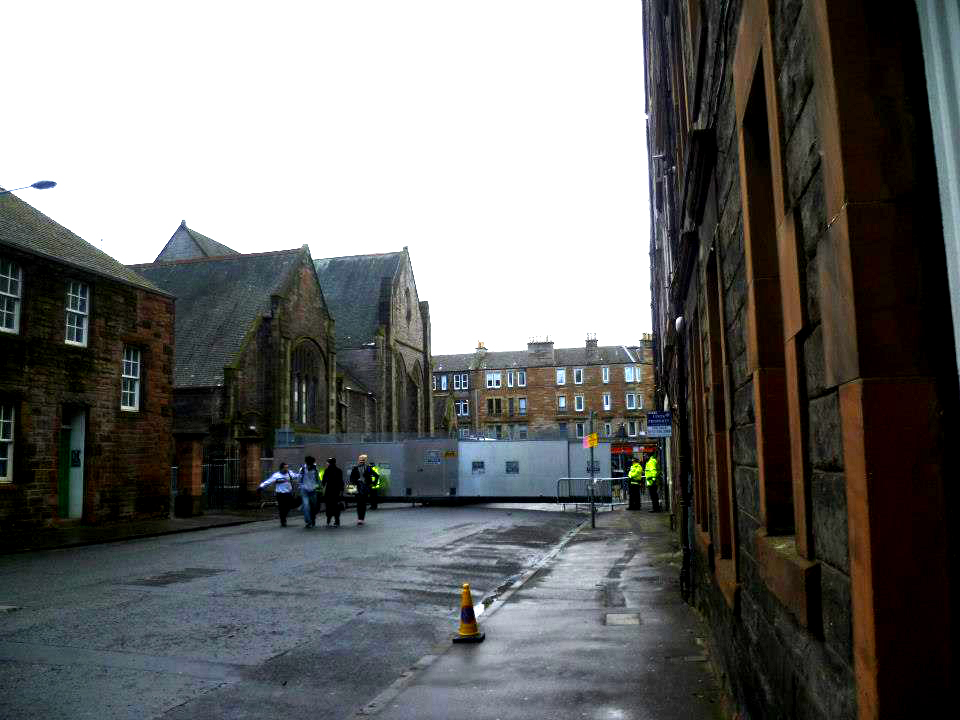 The Sectarian Divide Made Temporarily Tangible The Sectarian Divide Made Temporarily Tangible In Scotland I have observed as an outsider the various ways in which the people around me define and differentiate themselves. Overlapping identities coexist and come into conflict along many geographic and emotional lines. While currently the most politically pertinent division is Scottish/English (and the separate but more ambiguous Scottish/British), there are numerous others, such as Catholic/Protestant, Highland/Lowland, Glasgow/Edinburgh, Edinburgh/Leith etc. This comes literally close to home when a temporary wall is erected outside my door to segregate Protestant and Catholic fans during particular football matches. So, this past weekend I took my bicycle on the train to Berwick Upon Tweed to visit some of the border crossings in that area. First up, the border crossing of the east coast main line. I’ve caught the charming blink-and-you’ll-miss-it sign that marks the border as it flashed by the train window on a few occasions. Since this was where I first crossed into Scotland, and because the sign was so appealing, I wanted to try to capture it. Fortunately, from Berwick there is a coastal path that leads the 5 or so miles to the border. As anyone who’s taken this section of train knows, the scenery is gorgeous; I always look forward to it. The rail skirts the tops of red sandstone cliffs that drop to the sea. I must have hundreds of photos taken from the train as it travels along this stretch. The footpath winds along the clifftops between the tracks and the cliff. I wish I could have savoured it more, but I had an ambitious schedule and, this being late November, not many hours of daylight. 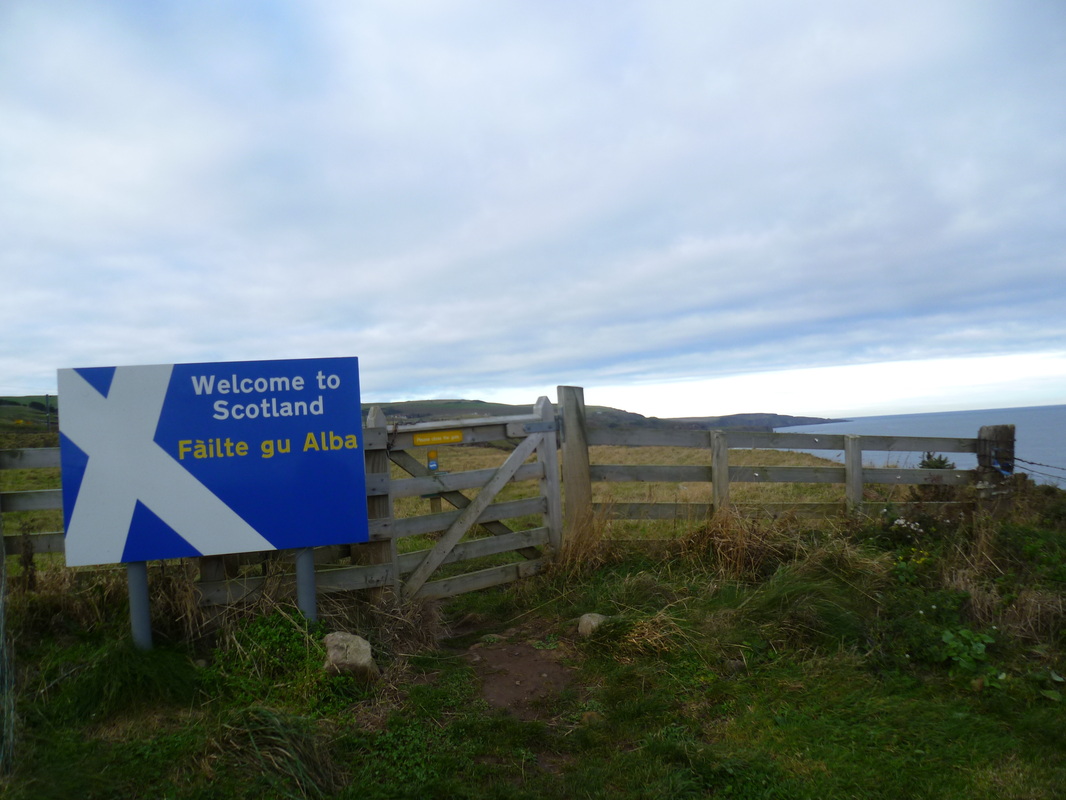 Also, while it’s a wonderful path, it is not suitable for bicycles. I’d been advised that taking the road (the A1) up wouldn’t have been safe, and I didn’t anticipate going back the same way, so I trudged along pushing the bike through muddy ruts and tall grass and over a style or two. At the Border on the footpath a large sign welcomes you to Scotland. Pass through the gate, turn left, and at the end of the field is where the rail crosses the border – and the sought-after sign (see top of this post)! 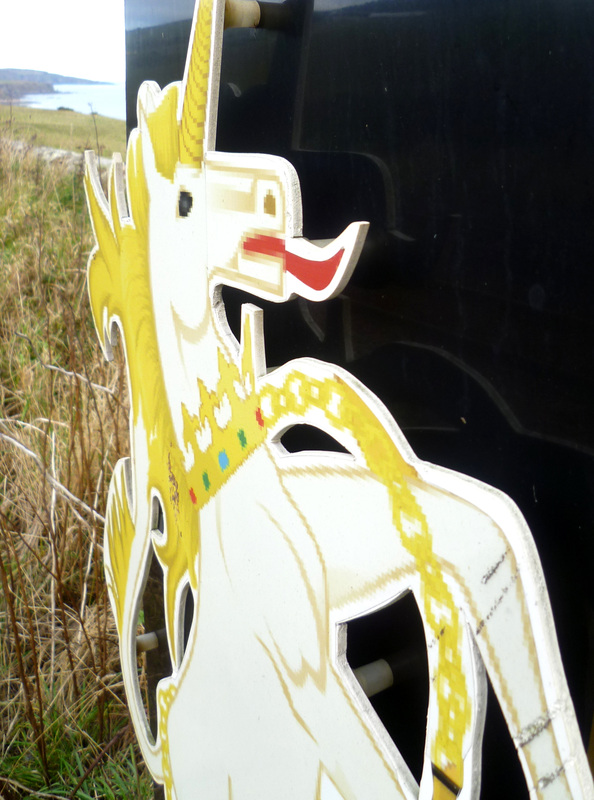 Pixelated Unicorn Pixelated Unicorn I spent a while straddling the border, futilely trying to determine what might make one side different enough from the other to draw the line here. Borders are somewhat random - historical and/or geographical accidents. To neighbors a border it is usually less symbolically significant than it is to citizens of (usually) distant capitals. If I’d been at a contested border I would have felt the urge to symbolically undermine it by moving things from one side to the other. As it is, this isn’t that kind of border, and the independence referendum isn’t about territorial disputes. The only subversive act I could engage in was to jump the wall onto the tracks to get some more photos (then pretend nonchalance when a train came). I was disappointed to see that these border signs, which I’d assumed to be a charming relic of a bygone era of rail travel, were in fact printed on plastic and even badly pixelated! 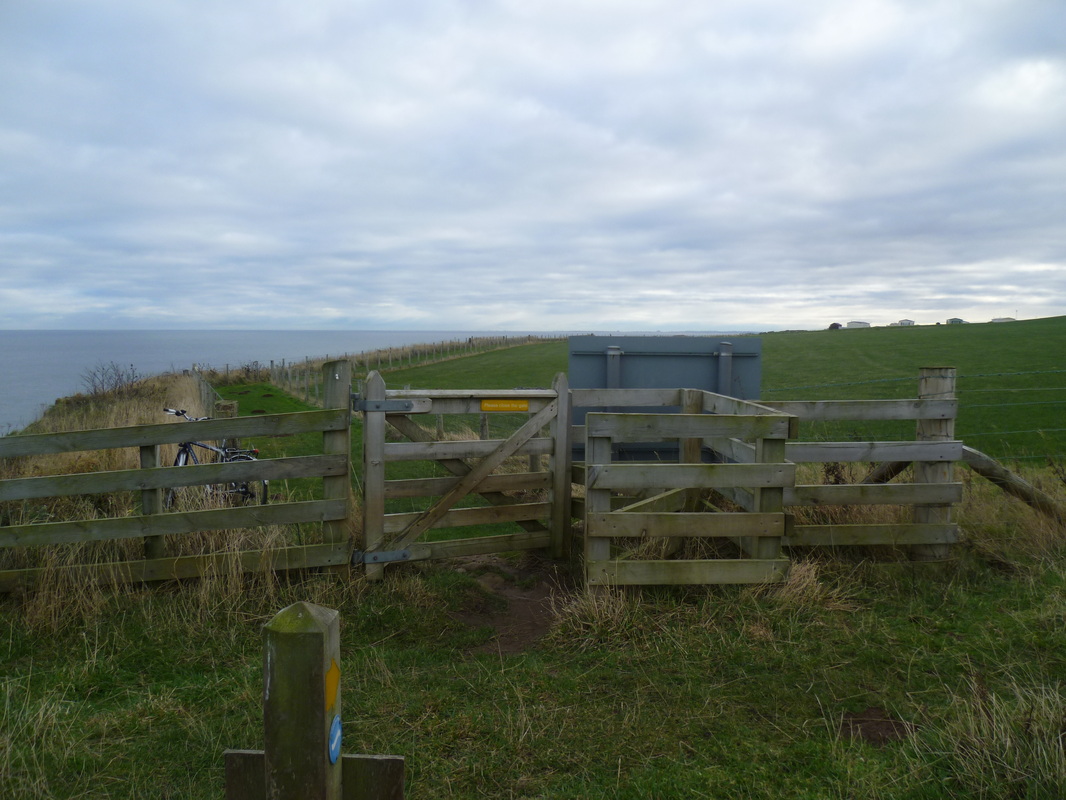 Not making a show of welcoming you to England Not making a show of welcoming you to England Returning back south on the path I also noted that England doesn't provide the same welcome as Scotland. Determined to not walk the bike back along the cliffs, I decided to risk the A1. It turns out there is a paved path alongside the road that allowed safe and speedy passage – past the curiously called ‘Conundrum.’ From there I cycled west, headed for the evocatively-named Union Bridge and from there to Norham. About 2 miles from the Union Bridge (and 3 miles outside of Berwick), I learned another lesson: around this time of year farmers trim back their thorny hedges and those little bits of debris are insidious. 9 punctures later….. At least the scenery was lovely, it wasn’t raining, and the locals out for a walk were friendly – including the owner of the offending hedge.
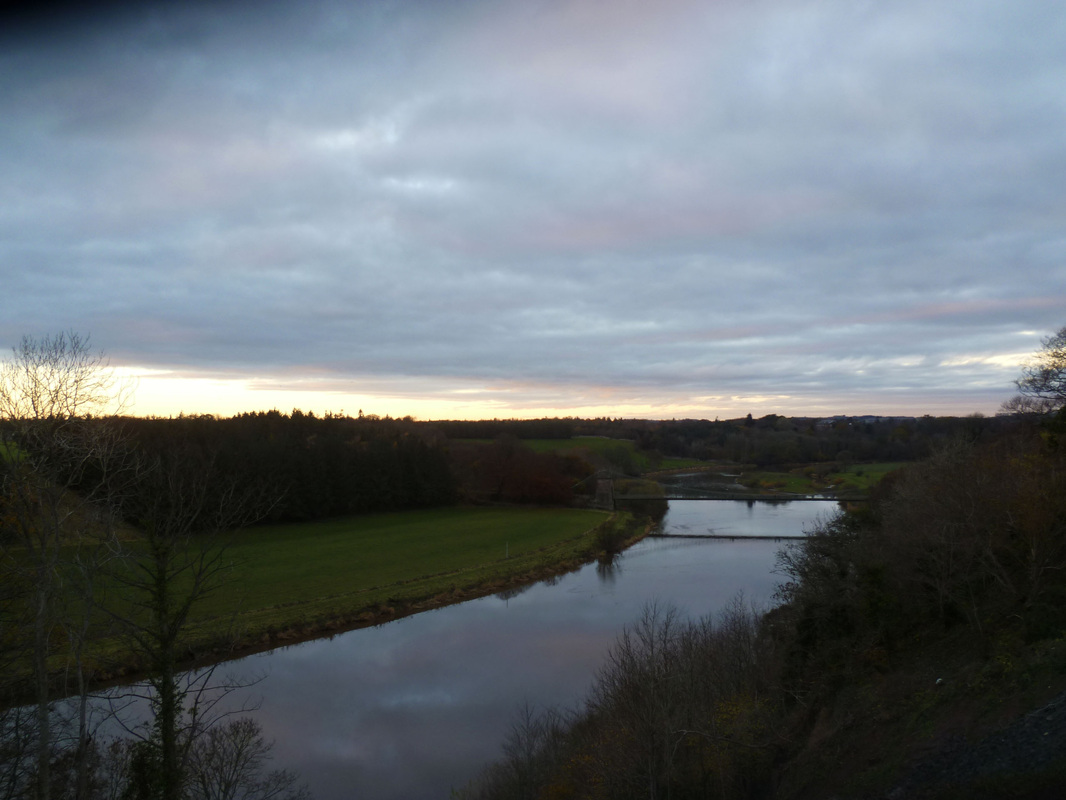
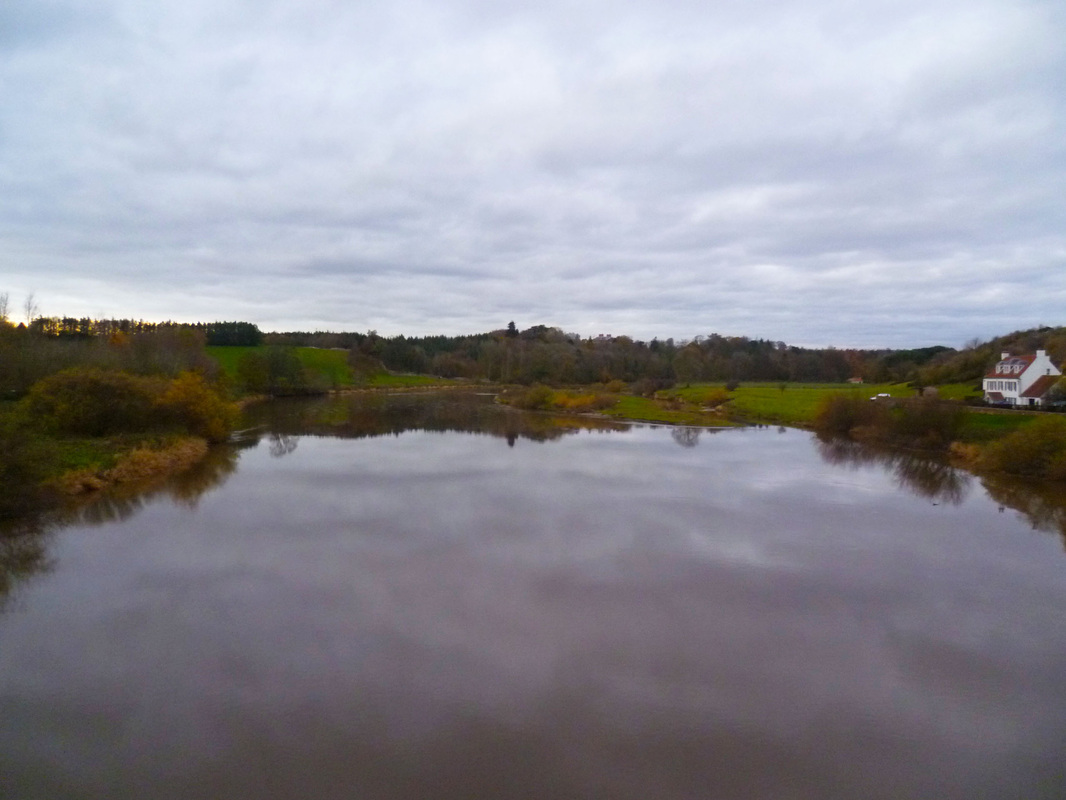
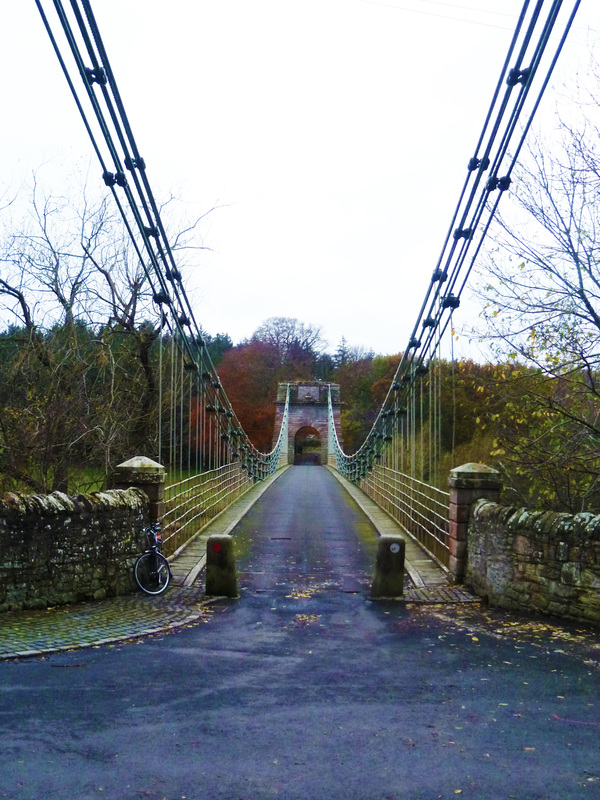
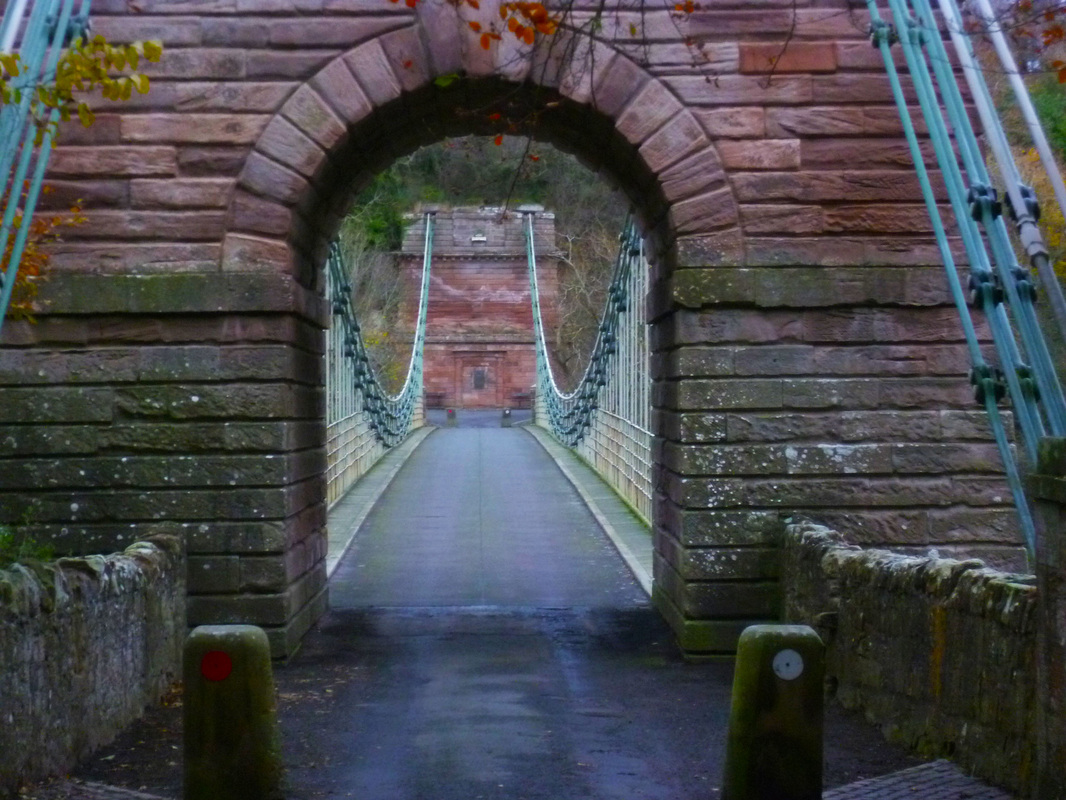
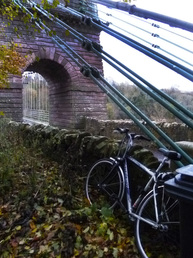 With the light fading fast, my puncture repair kit exhausted and still a slow leak in my tubes, I pushed on to the Union Bridge. Built in 1820, it was the longest wrought iron suspension bridge in the world and is the oldest suspension bridge still carrying road traffic. Though a marvel for its time, today it’s a lovely, if unassuming, bridge nestled in a lovely, if unassuming, bend in the River Tweed. It’s a non-rigid structure, as is apparent when a car squeezes through the size-limiting corsets on either side and crosses. At this point, the darkness was descending. As was the pressure in my tyres. I abandoned the idea of Norham and cycled back to Berwick, stopping a few times to top up the tyres.
I’m not sure what will come from these excursions to the Border. The land is impervious – disconnected from, yet underpinning the issues that are raging in Scotland. We create the notion of a nation then impose that idea on the land. Those of a sentimental or patriotic bent feel a connection to the land, but the land doesn’t return the favor.
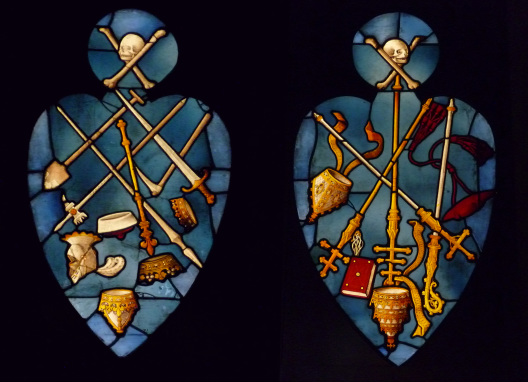 Two gorgeous panels from the the Victoria & Albert Museum in London. These two, the Emblems of the Laity and Clergy originally flanked a c.1500 - 1530 window showing the Triumph of Death, probably in Stain-Herbland, Rouen.
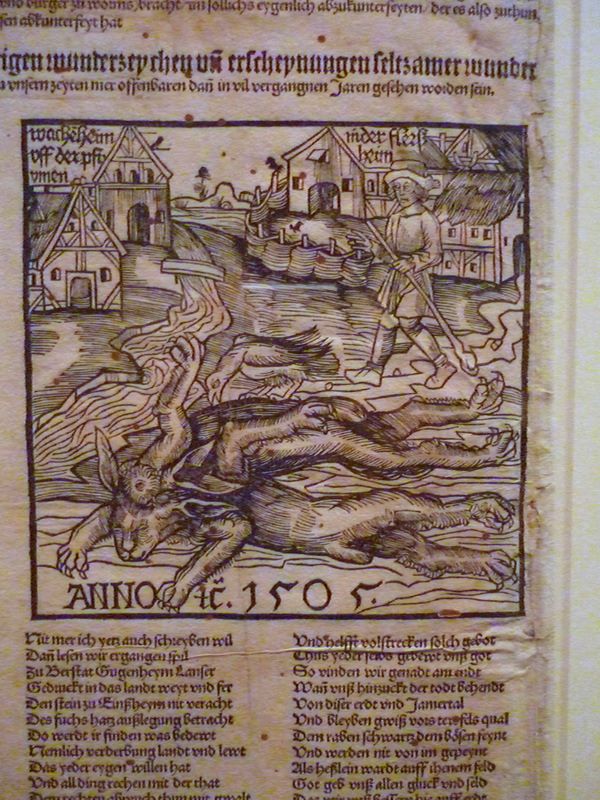
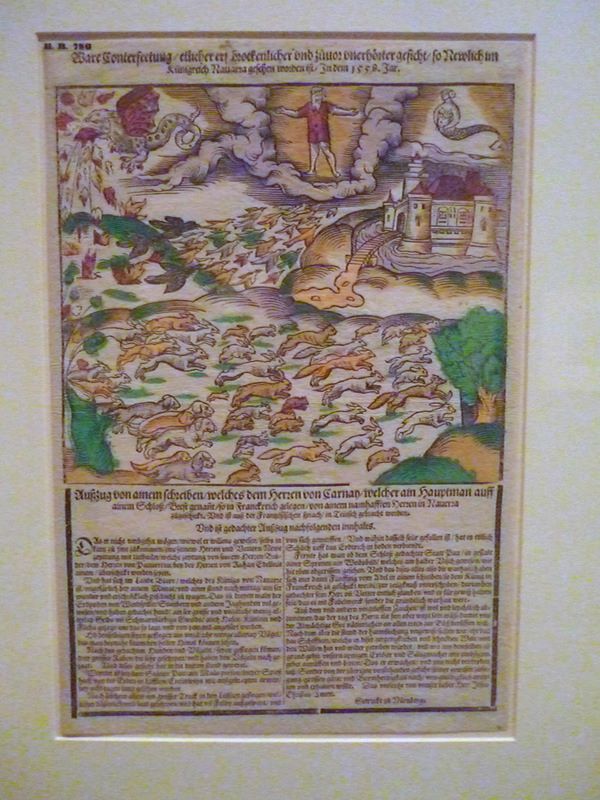
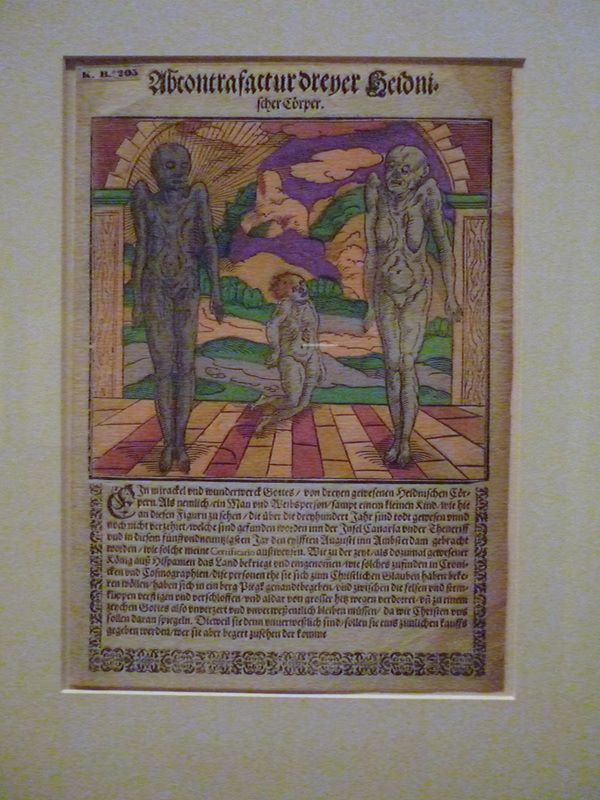
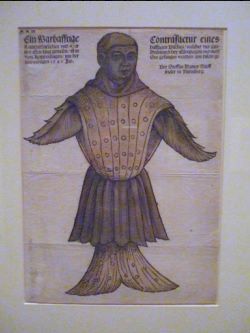
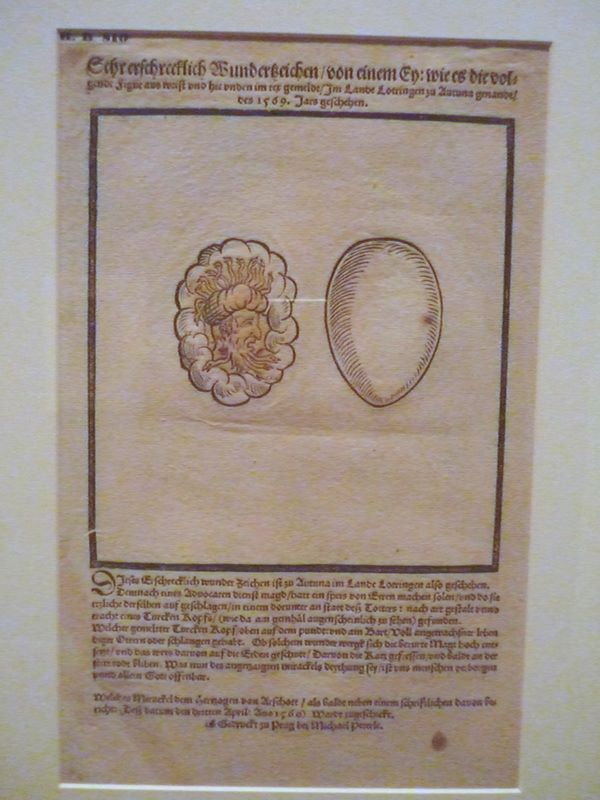
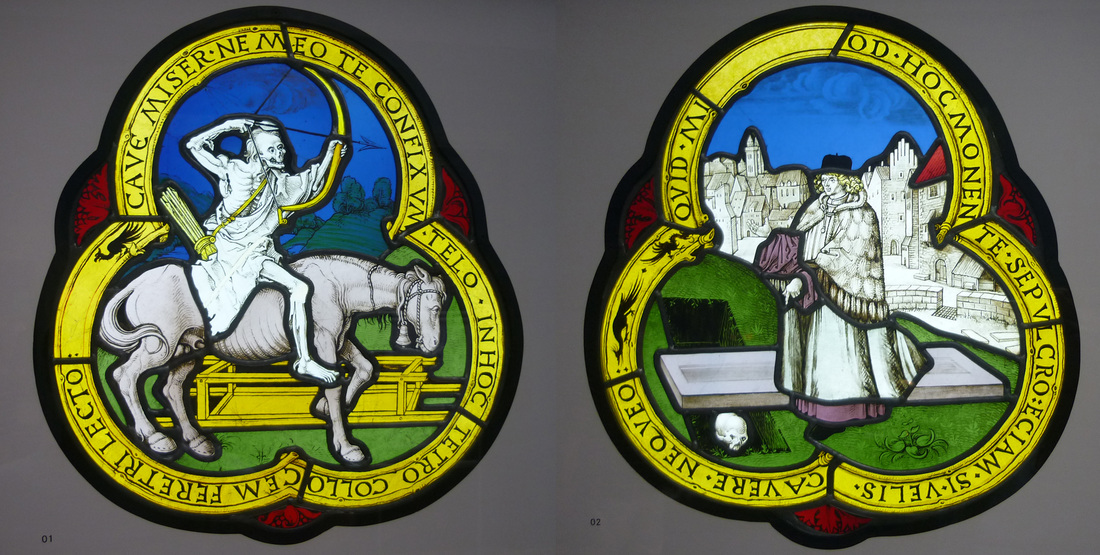 When i was last in Munich I had a free day, so I made a pilgrimage to Nuremberg specifically to see these stained glass panels based on designs by Albercht Dürer: Death on Horseback, and The Provost Sixtus Tucher standing on his open Grave, both from 1502. Lovely, macabre little pieces, sensitively painted. Compare with the same theme executed around the same time in the panel for Henry Williams, Vicar of Stratford on Avon, below. The rest of the Museum was fantastic, as well. As you'd expect, a rich collection of German Renaissance paintings, which are becoming a fascination of mine. But the two collections that really stuck out for me were: 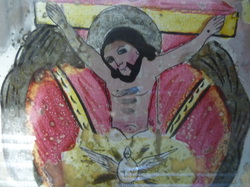 + a wonderful display of German folk art, which included this reverse painting on glass of a rather coy looking blushing Jesus; and + a bizarre collection of what I can only describe as sensationalistic tabloid journalism from the 1500's. I can't recall the specific stories recounted in these prints, but they were all sensational stories of miracles, curses, cures, plagues, strange births, monsterous creatures and wonderous signs told with breathless hyperbole (English translations were helpfully provided on the wall) If anyone can translsate these for me, or point me to a good book about such things, I'd be happy to post it.
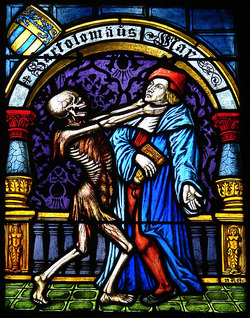 Dance of Death window, Bern Münster, Ⓒ Christoph Hurni Dance of Death window, Bern Münster, Ⓒ Christoph Hurni The Dance of Death is an absolute favourite theme of mine. It is a lyrical, haunting, horrible and humourous allegory of the universality and inevitablity of death, across all ages and walks of life. These photos are of the Totentanz window in Bern Münster, and are all Ⓒ Christoph Hurni The information I've found so far suggests that the window was made around 1450. However, some of the close-ups clearly show dates of 1917 & 1918 (and the glass is in too good condition for it to be 550 years old....). It is popularly believed that the Dance of Death became popular in the mid-15th Century, following a chain of catastrophes across Europe - so perhaps these were re-imagined in the 20th Century as a response to World War I? I'll research further and update this post. In the meantime, I hope you enjoy these macabre pieces...... https://www.flickr.com/photos/40826712@N00/3494229018/in/album-72157617510075033/ 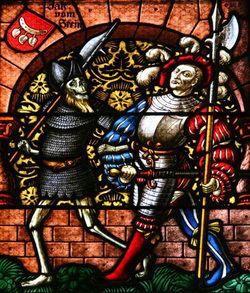 Dance of Death window, Bern Münster, Ⓒ Christoph Hurni https://www.flickr.com/photos/40826712@N00/3493421065/in/album-72157617510075033/ 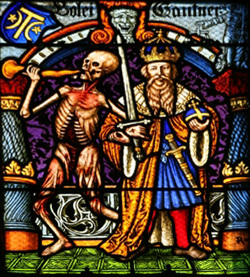 Dance of Death window, Bern Münster, Ⓒ Christoph Hurni https://www.flickr.com/photos/40826712@N00/albums/72157617510075033/with/3493421065/ 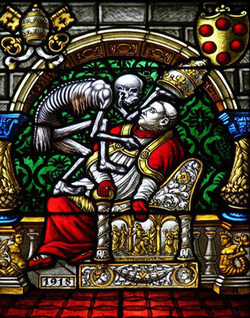 Dance of Death window, Bern Münster, Ⓒ Christoph Hurni https://www.flickr.com/photos/40826712@N00/albums/72157617510075033/with/3493421065/ 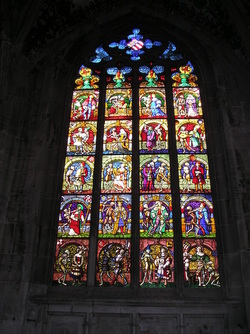 Dance of Death window, Bern Münster, Ⓒ Christoph Hurni 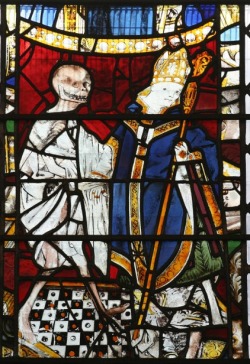 Again from the pages of Vidimus comes another great morbid panel, this one depicting a Danse Macabre, or Dance of Death from St. Andrew's Church, Norwich. In it a skeletal figure dances with a bishop reminding the viewer that, regardless of rank, death awaits us all.
Image © Mike Dixon 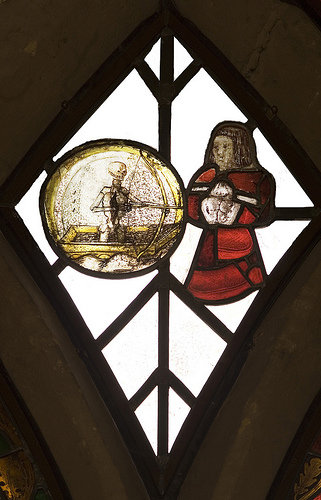 Judith Schaechter turned me on to this English gem, which also features in the fantastic "Death in England: An Illustrated History" edited by Peter C. Jupp and Clare Gittings.
It was commissioned by Henry Williams, vicar of Stratford on Avon, in 1500, showing the vicar himself kneeling in prayer being shot at by Death kneeling in a coffin. |


 RSS Feed
